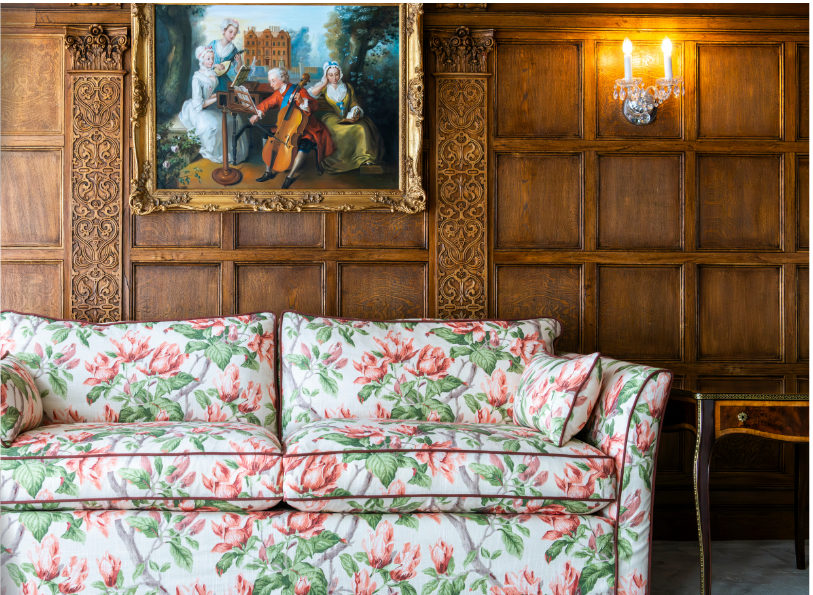
Specifying Bespoke Furniture: What to Consider When Working with Heritage Craftsmen
The finest interiors are not assembled — they are composed. And at the heart of every truly exceptional interior is furniture that has been made with intention, skill, and a deep respect for the traditions of the craft. Bespoke and heritage furniture — pieces made by craftsmen who have inherited centuries of knowledge and technique — brings a quality, a character, and a sense of permanence to a project that simply cannot be replicated by mass production.
At Brights of Nettlebed, we have long championed the work of heritage craftsmen, and our collection includes some of the finest examples of this tradition available anywhere in the UK. Here is what interior designers need to know when specifying bespoke and heritage furniture for high-end client projects.
What Do We Mean by Heritage Craftsmanship?
Heritage craftsmanship refers to furniture made using traditional techniques — hand-cut dovetail joints, hand-applied veneers, hand-painted decoration, water gilding, marquetry, and parquetry — that have been passed down through generations of skilled makers. These are techniques that cannot be replicated by machine, that require years of training to master, and that produce results of a quality and beauty that is immediately apparent to anyone who encounters them.
Heritage furniture is not simply old furniture. It is furniture made in the tradition of the great English and European cabinet-making houses — Gillows of Lancaster, Chippendale, Hepplewhite, Adam — using the same materials, the same methods, and the same commitment to excellence that defined those traditions at their peak.
Bespoke Customisation: When You Love a Piece But Need It Your Way
One of the most valuable — and often underutilised — services available to interior designers is the ability to take an existing piece and have it made bespoke to a client's specific requirements. This is not a compromise. It is, in many ways, the purest expression of what heritage craftsmanship is for.
A client may fall in love with a piece in our collection but need it in a different width to fit a specific alcove. A dining table may be perfect in every respect except its length. A cabinet may be exactly right in design and finish, but the client's room demands a taller or shallower version. In all of these cases, the answer is not to settle for something that almost works — it is to have the piece made to the exact specification required.
What Can Be Customised?
Working with our heritage craftsmen, a wide range of customisations are possible:
- Dimensions — width, depth, height, and proportions adjusted to fit a specific space or alcove
- Finish — lacquer colour, veneer selection, paint colour, or gilding specification
- Configuration — number of drawers, shelves, or doors; internal layout of storage
- Upholstery — fabric, leather, or COM (customer's own material) for seating and upholstered pieces
- Hardware — handle style, finish, and material
- Combination pieces — elements from different pieces combined into a single bespoke commission
The starting point is always a conversation. Our team at Brights of Nettlebed will work with you to understand exactly what is needed, advise on what is feasible, and manage the commission with the craftsmen on your behalf.
The Process: From Brief to Delivery
The bespoke process typically begins with a visit to one of our showrooms — either our Nettlebed Showroom in Oxfordshire or our Kings Road Showroom in Chelsea — where you can see the piece that has inspired the commission in person, discuss your requirements with our team, and begin to define the specification. From there, we will work with the relevant craftsmen to produce detailed drawings or samples for approval before production begins. Lead times vary depending on the complexity of the commission, but we will always provide a clear timeline at the outset.
The Althorp Collection: Furniture with Royal Provenance
For interior designers seeking furniture with genuine provenance and a connection to English heritage at its most distinguished, the Althorp Collection is without parallel. Inspired by the interiors of Althorp House — the ancestral home of the Spencer family and one of England's finest stately homes — and endorsed by Earl Spencer, these pieces carry a narrative and a pedigree that no amount of money can simply manufacture.

The Althorp House Desk — inspired by Althorp, endorsed by Earl Spencer

Althorp Mahogany Bookcase — a library piece of genuine distinction
The Althorp House Desk is a masterpiece of the cabinet-maker's art — and one that can be specified in bespoke dimensions to suit a particular study or library. The Althorp Mahogany Bookcase is similarly available for bespoke specification — particularly valuable for clients with alcoves or wall spaces that require a precise fit. The Grand Staircase Bureau, inspired by the grand staircase at Althorp House itself, is perhaps the most narratively rich piece in the collection — a bureau with hidden drawers, faux books, and suede panelling that tells the story of one of England's greatest houses every time it is opened.
The Gillows Tradition: England's Greatest Cabinet-Making House
Gillows of Lancaster was, for two centuries, the most celebrated cabinet-making firm in England. Their work — characterised by exceptional quality of materials, precision of construction, and elegance of design — set the standard against which all English furniture was measured. To specify a piece in the Gillows tradition is to connect a client's home to the very pinnacle of English craftsmanship.

Gillows Replica Bureau — a faithful reproduction of an English masterpiece

The Gillows Stool — understated elegance in the Gillows tradition
The Gillows Replica Bureau is a faithful reproduction of one of the firm's most celebrated designs — made using the same materials and techniques as the original. It can also be specified in bespoke dimensions where a client's space demands a particular width or height — making it as practical as it is beautiful. The Gillows Stool brings the same tradition to a more compact form, and is available with bespoke upholstery in the client's own fabric or leather.
Pieces Inspired by History: The Captain's Writing Tables

Dutch East India Company Captain's Writing Table — a genuine antique, circa 1730

The Captain's Writing Table — a handmade contemporary interpretation, available bespoke
The Dutch East India Company Captain's Writing Table is a genuine antique from circa 1730 — a piece of genuine historical significance that cannot be replicated. However, The Captain's Writing Table — a handmade contemporary interpretation of this original — is available as a bespoke commission. If a client loves the design but needs a different width, a different finish, or a different configuration of the interior, our craftsmen can accommodate this. The result is a piece with all the romance and narrative of the original, made precisely to the client's requirements.
The Art of Marquetry and Inlay

Serpentine Mahogany Chest with Strapwork Marquetry — a masterclass in the marquetry tradition

Gilded Writing Table or Desk — gilding as a fine art
The Serpentine Mahogany Chest of Drawers with Strapwork Marquetry is a masterclass in this tradition. The Gilded Writing Table or Desk showcases the equally demanding art of water gilding — a technique that requires multiple layers of gesso, clay, and gold leaf, burnished to a depth and warmth that no paint or spray finish can replicate. Both pieces can be discussed as the basis for a bespoke commission where a client loves the design but requires different dimensions or a specific finish variation.
Key Considerations When Specifying Bespoke Heritage Furniture
Start with What You Love
The best bespoke commissions begin with a piece that already exists — one that a client or designer has seen in a showroom, in a photograph, or in another interior, and fallen in love with. Use that piece as the starting point for a conversation about what needs to change to make it perfect for the specific project. Our team at Brights of Nettlebed are experienced in translating this kind of brief into a precise specification that the craftsmen can work to.
Lead Times
Heritage and bespoke furniture cannot be rushed. The techniques involved — hand-cutting, hand-finishing, hand-painting, gilding — take time, and the finest craftsmen are invariably in demand. Build generous lead times into your programme — as a general guide, allow a minimum of 8–16 weeks for most heritage pieces, and longer for particularly complex or bespoke commissions.
Provenance and Documentation
For pieces with genuine historical provenance — such as the Dutch East India Company Captain's Writing Table or the Althorp collection — ensure that all relevant documentation is provided to the client and retained for their records. Provenance adds value, both financial and emotional, and it is part of what makes these pieces genuinely special.
Care and Maintenance
Heritage furniture made using traditional techniques requires appropriate care to maintain its beauty and integrity over time. Hand-applied lacquer, water gilding, and marquetry veneers all have specific care requirements. Our team are happy to advise on the care and maintenance of any piece in our collection.
Working with Brights of Nettlebed
We have been working with interior designers on heritage and bespoke furniture specifications for decades. Our team has deep knowledge of every piece in our collection and extensive experience of managing bespoke commissions on behalf of designers and their clients. We are a genuine partner in the specification process — from the initial conversation about what is possible, through the approval of drawings and samples, to delivery and installation.
We welcome trade enquiries and are happy to discuss terms. Private appointments are available at both our Nettlebed Showroom in Oxfordshire and our Kings Road Showroom in Chelsea, London.
Frequently Asked Questions
Can I have a piece from your collection made to a different size?
In many cases, yes. Many of the pieces in our collection can be specified in bespoke dimensions — different width, depth, height, or internal configuration — to suit a specific space or client requirement. Please contact us to discuss what is possible for the piece you have in mind.
Can I specify a different finish or fabric on an existing piece?
Yes. Finish variations — lacquer colour, veneer selection, paint colour, gilding specification — and upholstery in a client's own fabric or leather are all possibilities that we can explore with our craftsmen. Please contact us to discuss your specific requirements.
How long does a bespoke commission take?
Lead times vary depending on the complexity of the commission. As a general guide, allow a minimum of 8–16 weeks for most bespoke pieces, and longer for particularly complex commissions. We will always provide a clear timeline at the outset of any commission.
Do you offer trade pricing for interior designers?
We welcome trade enquiries from interior designers and are happy to discuss terms. Please contact us directly to begin a conversation about your project.
Contact us to discuss a bespoke commission or visit us at our Nettlebed or Kings Road showroom to discover the extraordinary world of heritage craftsmanship at Brights of Nettlebed.